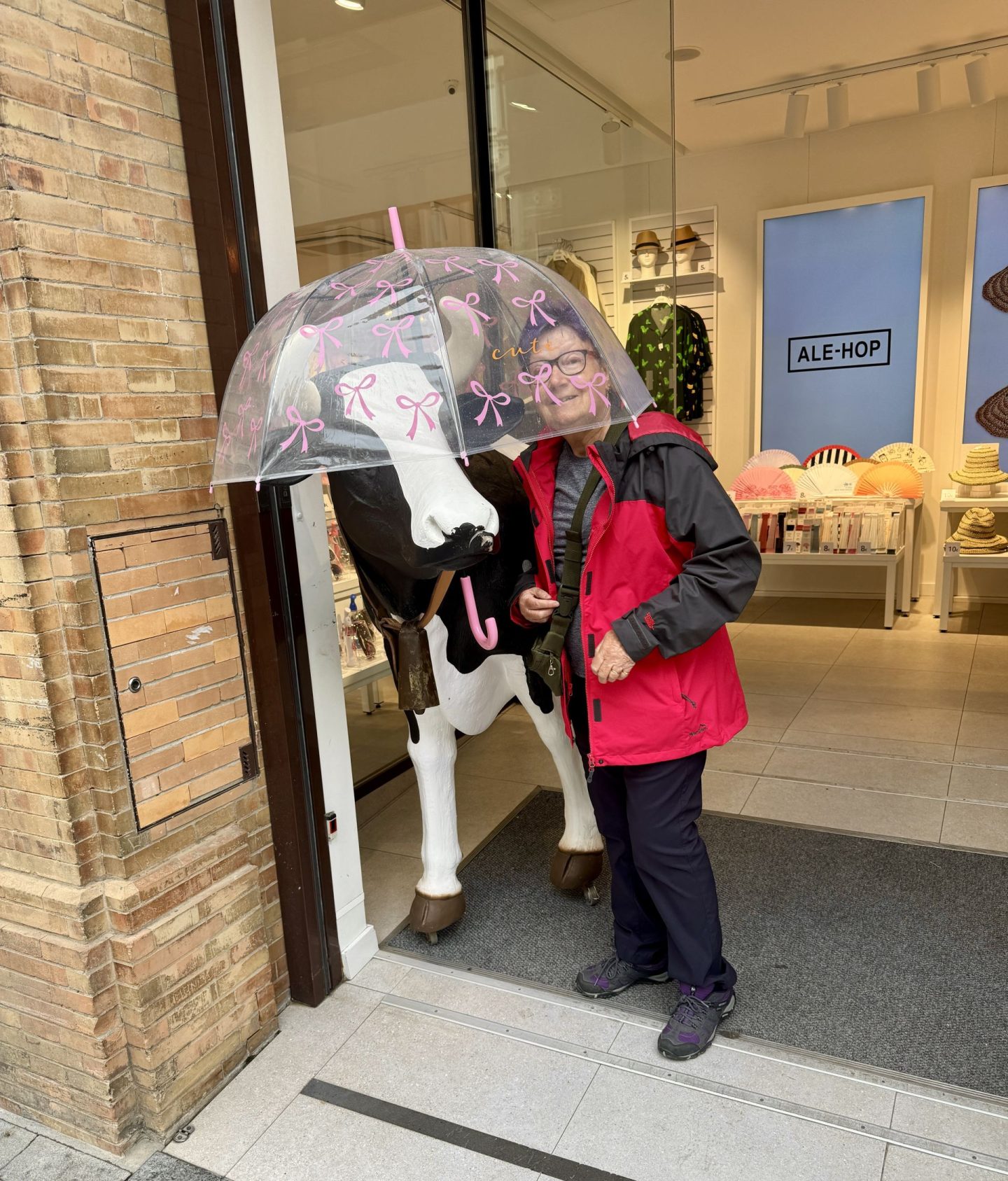
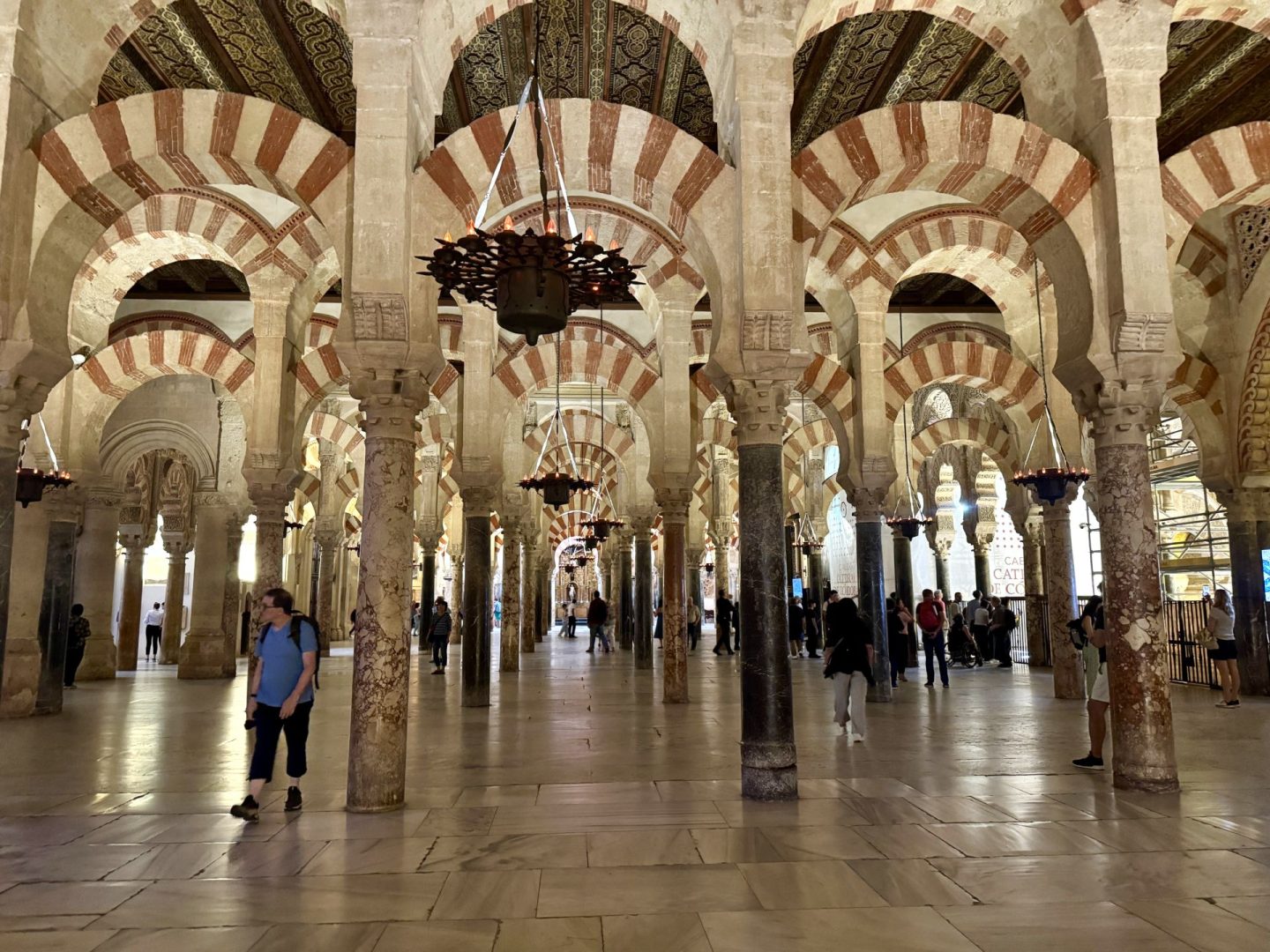
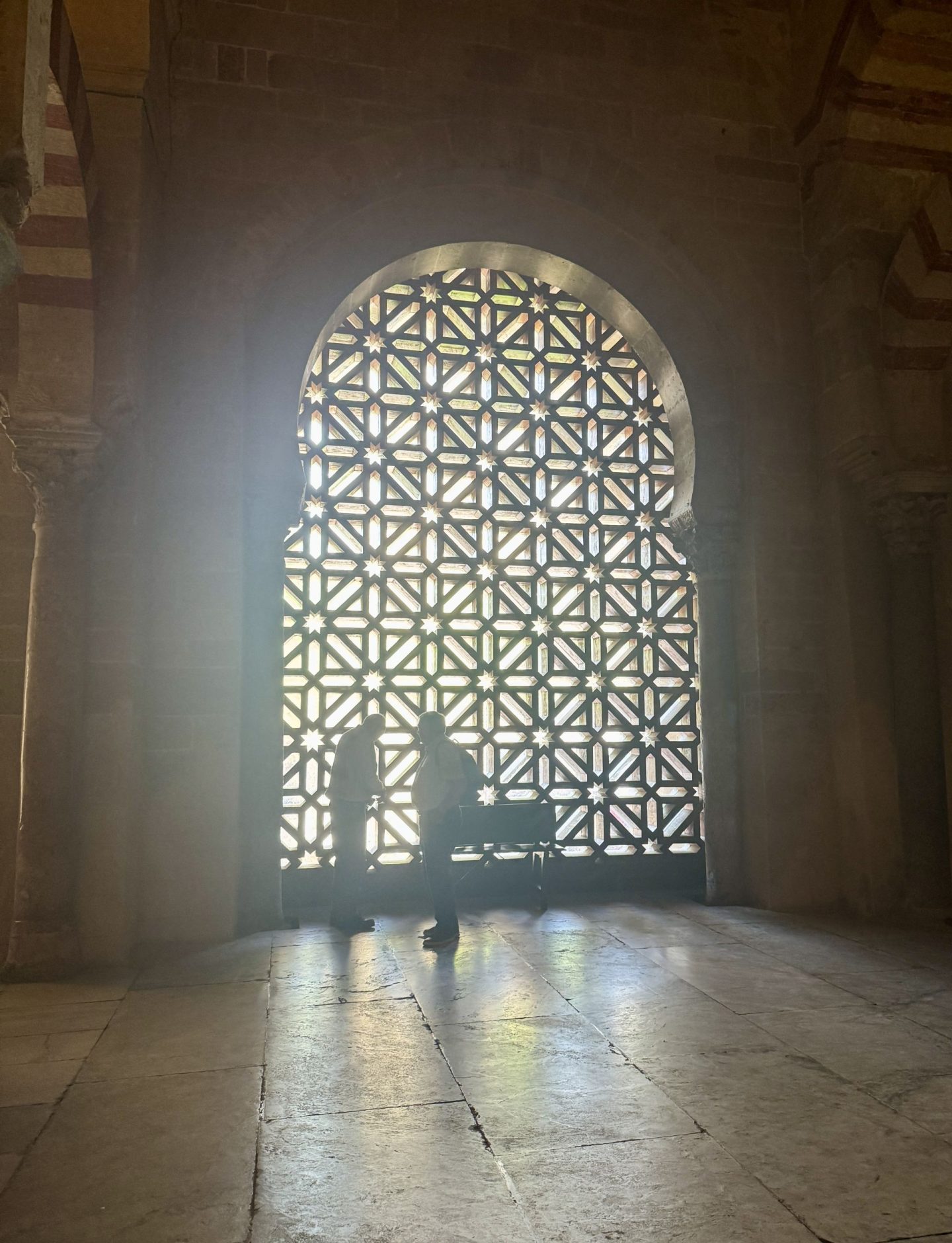
Yes, the familiar routine of a flight to Faro, and a few days with my daughter and family in their rural Portugese village, Sao Marcos da Serra. Have written about it so many times before… Then, a coach trip from Faro to Seville, and a day trip to Cordoba. After the peace of Sao Marcos, Seville felt impossibly crowded and touristy, although our little hotel was a haven of peace and tranquillity. The highlight was a visit to the Cordoba Mesquita Cathedral. Here is a view of the vast, dark prayer hall of the old Mosque.

Our favourite hotel in Faro has now changed its identity to the Occidental, Faro, part of the Barcello Group, but that was all that seemed to be different about it, fortunately. Spent a comfortable night followed by the usual great breakfast in the rooftop restaurant. A morning spent mooching round Faro. For the first time, we noticed these Orchid Trees (Bauhinia Variegata)…

Next, the train to Messines, the nearest town to Sao Marcos. This year, our visit was in April rather than February – the temperature of the house was far more civilised. Weather was ideal – sunny but not too hot. The village is so peaceful – the air is so fresh. We could just sit and look at nothing for days… We spent much time looking at the birds – of course, our resident storks a few doors down, but so many housemartins and swallows…

On the Saturday we went for lunch to a good restaurant in Messines, and in the evening there was a festival in the village. It was a national holiday, Freedom Day (Dia da Liberdade, which commemorates the 25 April 1974 ‘Carnation Revolution’, a military coup, where soldiers placed red carnations in their guns to symbolize a peaceful end to the Estado Novo regime, and the coming of democracy). It was also the feast day of St Mark, the patron saint of the village, and earlier in the day we watched the faithful bring the effigy of the saint out of the church, to be paraded round the village. You can see the Bombeiros playing a leading role – they are very big in Portugal – many are volunteers, I think, but they serve as fire service, ambulance/paramedics as well as general order-keepers and go-to service people…

The evening festival was, as one might expect in Sao Marcos, relatively low-key. There was a choir/band, who played various folk songs, and free food, which appeared to be provided by the Junta, or village council. The Junta President, aka Mayor, seemed to know Clara and Steve quite well, and came to speak to us. We also met numbers of their friends, mostly ex-pats, but not necessarily English – Dutch, Irish, Scandinavian… They were very like the people you’d meet down in Hastings Old Town, or in Moseley – it was good to see how many people like themselves Clara and Steve have encountered. Grand-daughter too seems to be cared for and accepted.


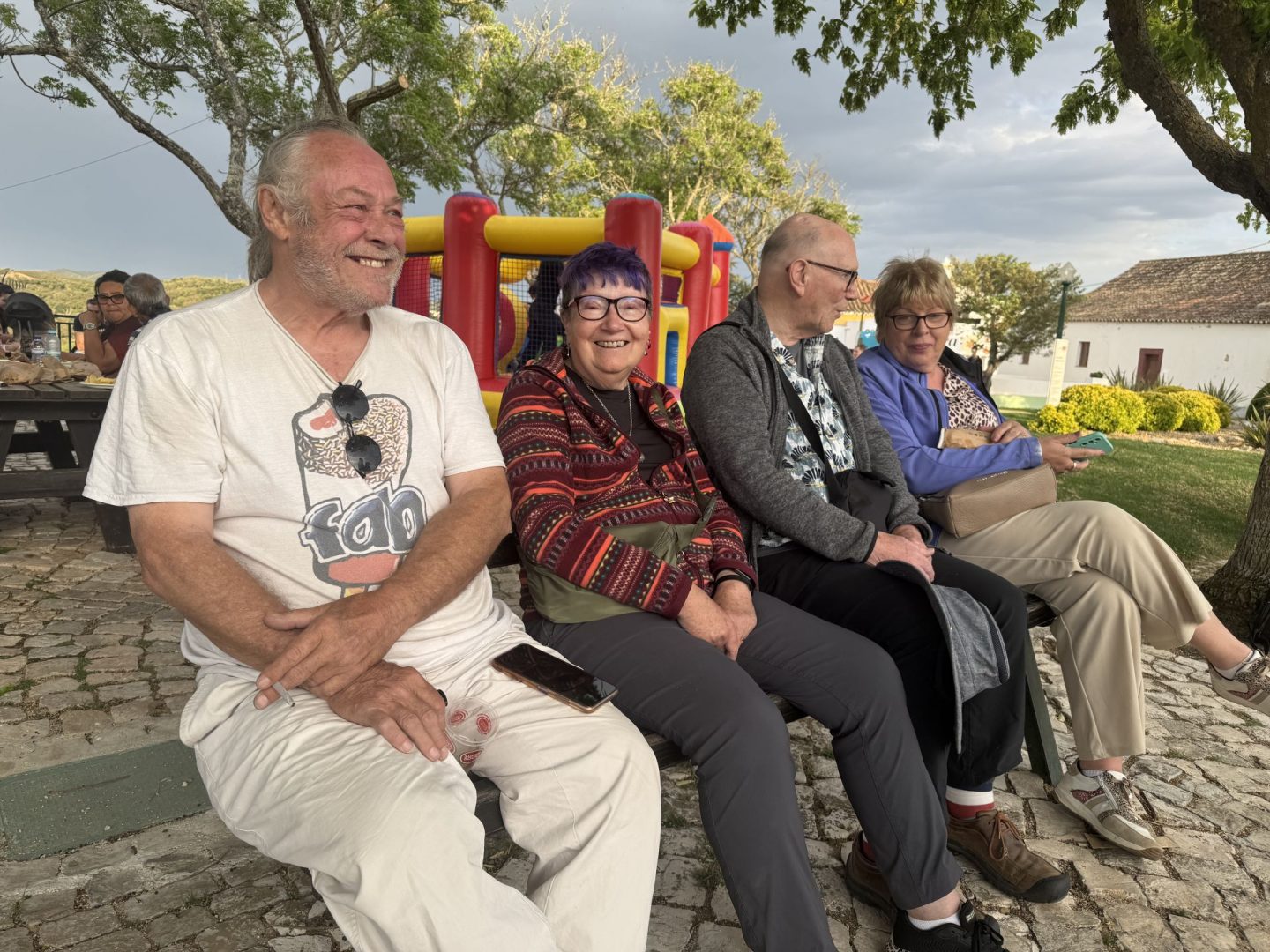
Philosopher and I went back to our house quite early, but the festivities were cut short by a gathering storm…

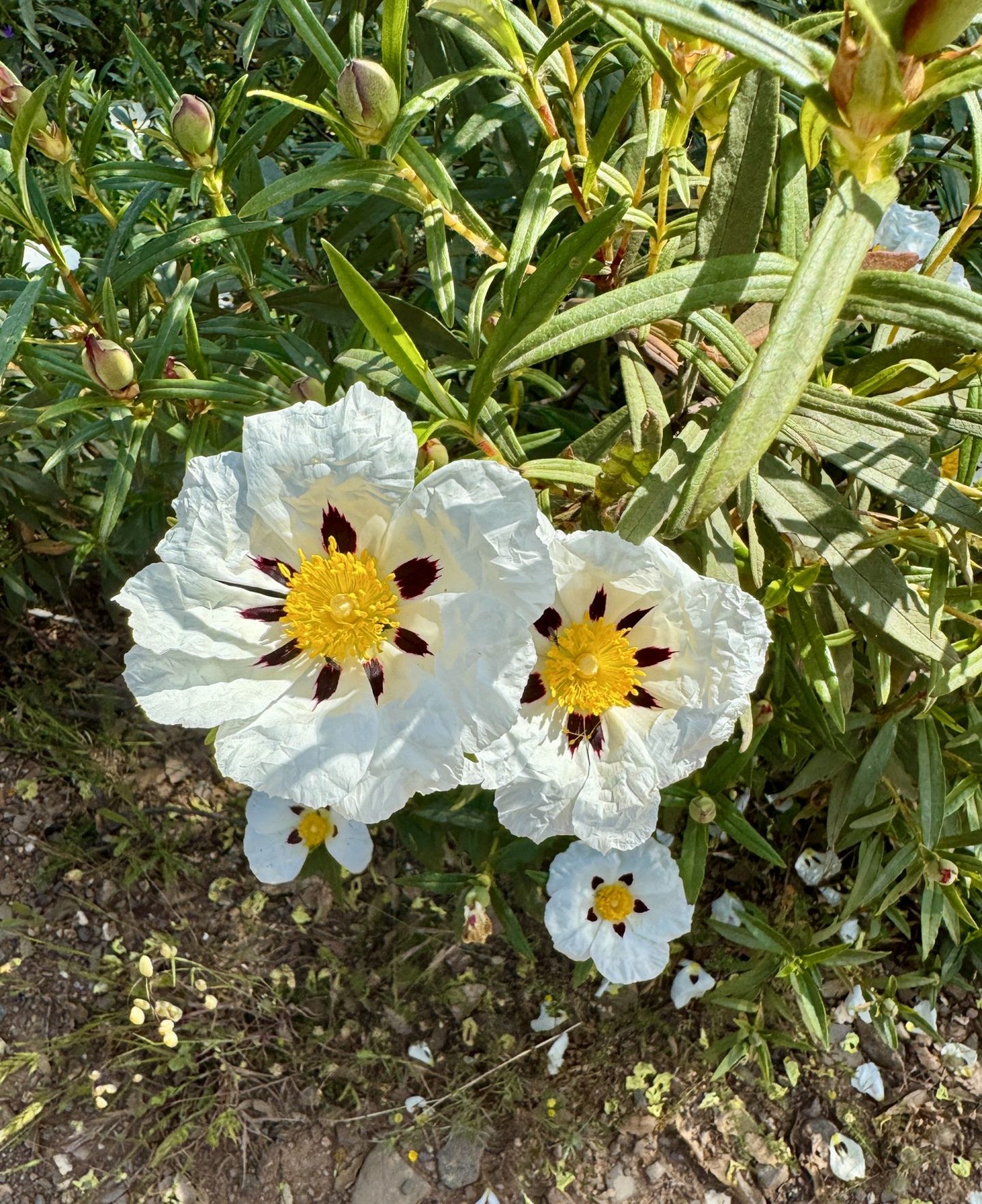
Next day we went for a beautiful walk. The wild flowers this year are incredible… they had so much rain earlier in the year, nature has now gone beserk… There are specially large numbers of rock roses, and the family have an informal competition to see who can spot flowers with the most dark spots on the petals.


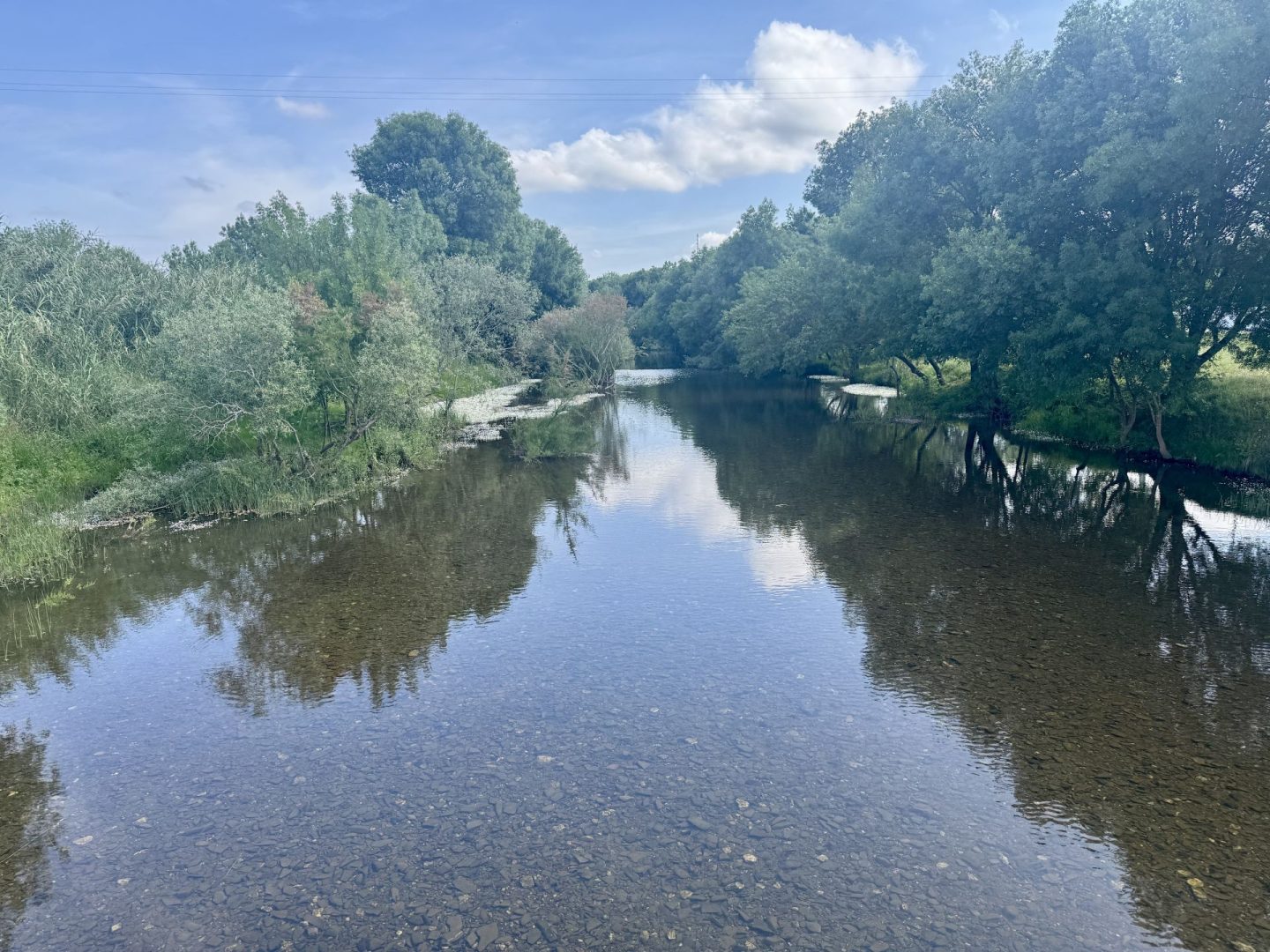

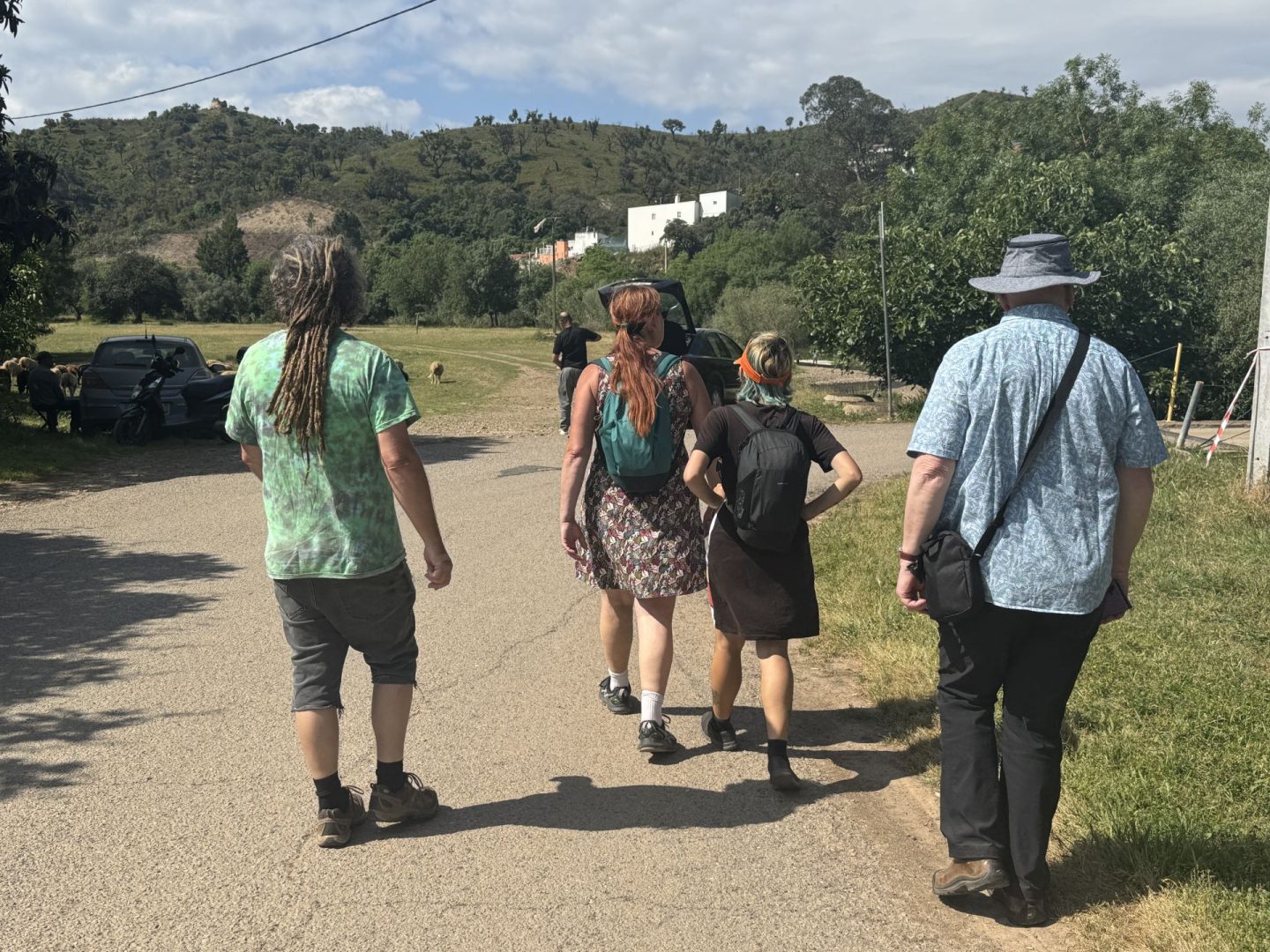
On Monday morning Steve took us to a nearby station, Tunes, to catch a train back to Faro, where we had a horrendous noisy, dusty wait in the coach station, which seemed to be being demolished around us. The coach arrived 40 minutes late, but once we got on, the 2.5 hour journey to Seville was relatively smooth.
Once we got there, we realised there was a problem. The city was jam-packed with tourists, and all the big sites were booked up. I had consciously not booked things in advance because I didn’t know how energetic we’d feel when we got there, how much time we’d have etc… and I thought, mid-week, out of season, it would be fine… how wrong could I be. We couldn’t get tickets to see the Alcazar at all, only manged to snag a couple of entries to the Cathedral at 5pm on the day we arrived, and train tickets? Forget it. I assumed we’d just waft along to the station, buy tickets for Cordoba and off we’d go… but no… you have to go to the ticket office, take a queue ticket, wait your turn, then there might or might not be any seats on the train you want. We got there at just after 10am to catch a 10.30 train, but ended up getting the 12.17! This meant we missed our slot for the Mesiquita, which I had hastily booked at the hotel that morning, so lost that as well… I should have known about Spanish inter-city trains from my experience at Atocha staion in Madrid, trying to go to Toledo, but somehow I thought Seville station would be much smaller and more manageable.
Anyway, when we finally got to the Mosque/Cathedral, it was fantastic. I had seen photos/telly about it, but the reality is far more impressive. The link to the Wiki entry about its history appears at the top of this post. Suffice it to say that the Mosque is very large and incredibly old, and after the Moors left Spain it had a Catholic cathedral inserted into the middle of it. The effect is remarkable. Because of the crowds of tourists, it did not feel mystically spiritual or whatever – not like Agia Sophia in Istanbul – but the building is extraordinary. Here are a few more photos.


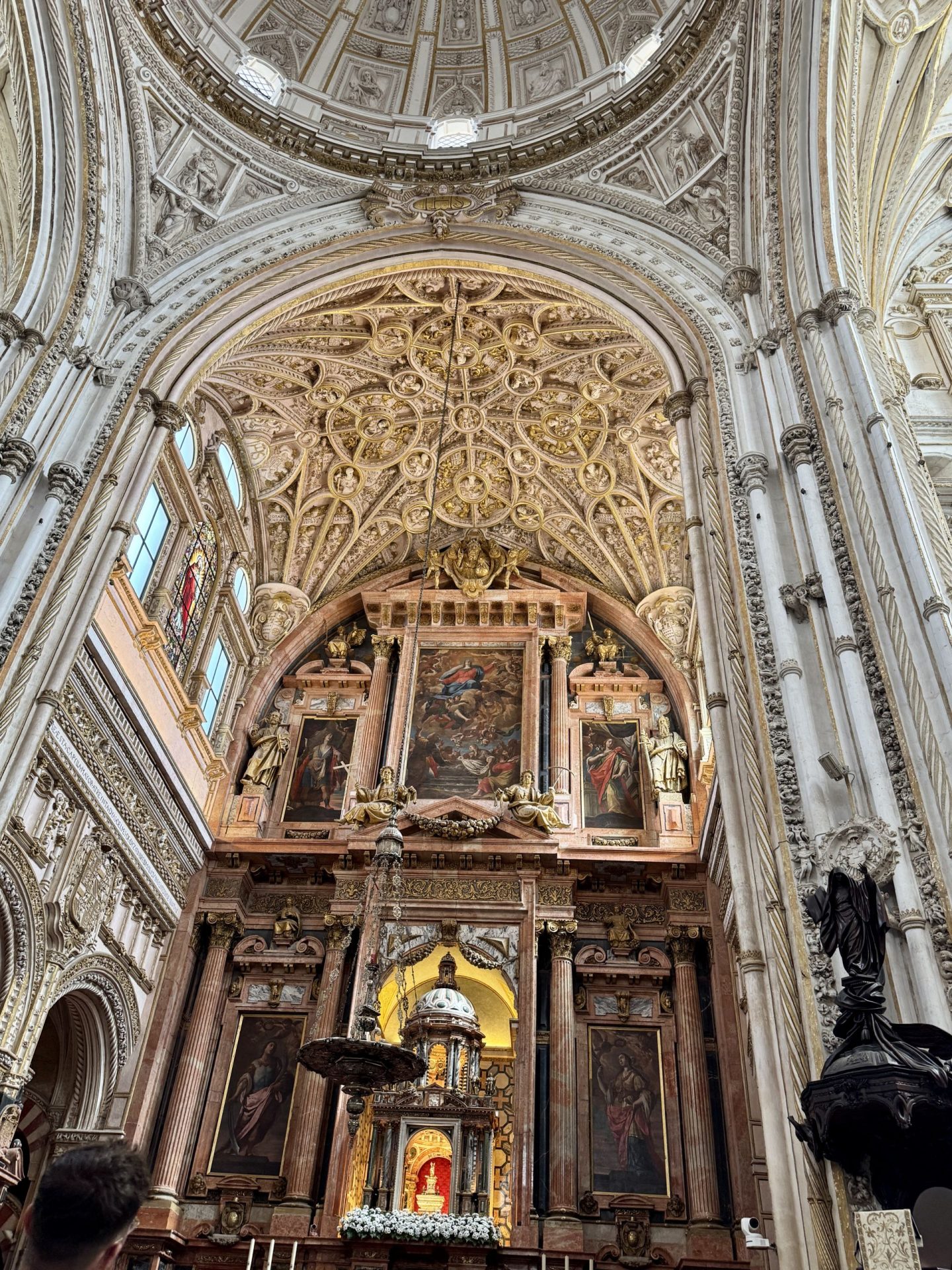
Cordoba itself looked very interesting, but by this time we were knackered and it was incredibly hot and muggy, so we didn’t see much. A big arch… a Roman bridge…
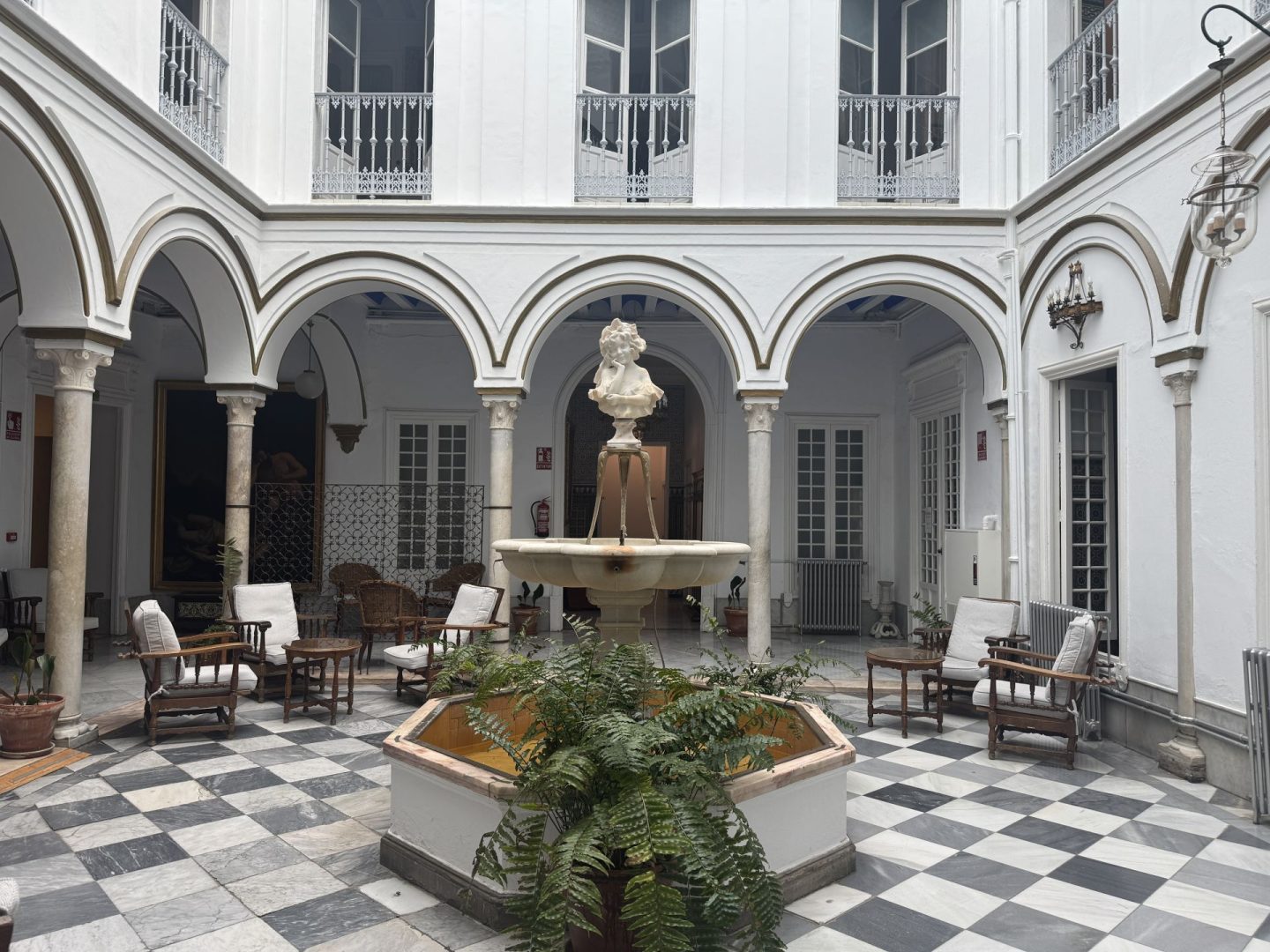
So, what of Seville? First, our hotel, the lovely old Hotel Simon, right in the heart of the Old Town. I have discovered that my hotel booking habits reflect my mood at the time. Severely practical – think Premier Inn. Shameless luxury – think Elounda Bay palace in Crete. Quirky/ faded/historic – think so many huge crumbling Victorian piles, idiosyncratic inns – and this one. Our mood when we finally got to Seville was tending towards shameless luxury, but fortunately the Hotel Simon delivered, even though it only had an official one star rating. One of the oldest hotels in Seville, Moorish style, tiles, patio, fountain, huge bedroom – all checked. Our room was dominated by a vast, spooky Empire-style Armoire, and had one of those ornate covered glass balconies. I thought the room might be full of ghosts but no… Modern bathroom and new shower. Very quiet. Good breakfast. Battleaxe would totally recommend. Here are some photos.


Seville Cathedral didn’t do much for us – it is vast, and incredibly ornate, but I prefer more Northern Gothic style cathedrals with long naves. The Cathedral closed at 5.30, and the folks in the ticket office were a bit surprised we wanted to go in so close to that time. Little did they know that the average Battleaxe and Philosopher church visit lasts around 20 minutes… We did see the tomb of Christopher Columbus.

What else? As we couldn’t go to the Alcazar we went to number three on the best sites of Seville list, the Plaza de Espana. Granted, it was actually raining when we visited, and the place was one vast crawling ant-heap of tourists, but we thought it was gross. A huge overblown monument to something or other. Looked a bit fascist to me. It was built in the 1920s when Seville hosted a Worlds Fair. You can read all about it in the link above.

This all sounds a bit grim, but I think we didn’t do poor Seville justice. It was hot and muggy then wet, and just so crowded. We didn’t see much of the city. but there were many beautiful buildings, lovely-looking gardens and parks, great shops and loads of eateries. Many jacaranda trees loaded with purple blossom…

We often think how lucky we are to have visited so many great places in the world before the tourist boom really took off… another thing that sadly, people younger than us will never experience.
When we were with the family in Sao Marcos, we were discussing the view, so prevalent among those younger than us, that ‘boomers’ have everything. Well, it isn’t a view, it is a reality. We have substantial secure pensions, large property holdings, we had job security… and most of the younger ones don’t have any of those things. But honestly, young ones, it was not down to us – successive governments created the situation, along with the neo-liberal ideology that favours the rich getting richer. Why can’t we have a wealth tax? Why do well-off pensioners need state pensions, free bus passes and so on? Then again, we are faced with a broken social care system that means that much of our wealth will be swallowed up by the costs of care in our old age.
Oh enough.